Aufregende Neuigkeiten! Yijin Hardware wird umbenannt in Yijin Solution. Mehr erfahren →

Keine Zeichnungen? Kein Problem: Unsere Ingenieure begleiten Sie vom Konzept bis zur Produktion. Neue Leistungen entdecken

Zum Inhalt wechseln
info@yijinsolution.com
+1 844 598 7800
Chat
DE
DE
EN ES FR
Yijin Solution Logo
  • Dienstleistungen
    • CNC-Bearbeitungsdienstleistungen
      • CNC-Fräsen China
      • CNC-Drehen China
      • CNC-Holzfräsen China
      • CNC-Bearbeitung China
      • Schnelle CNC-Bearbeitung
      • CNC-Kleinserien-Bearbeitung
      • Hochvolumige CNC-Bearbeitung
      • Schweizer Zerspanungsdienst
    • Blechbearbeitung
      • Laserschneiden
      • Wasserstrahlschneiden
      • Plasmaschneiden
      • Metallbiegen
      • Stanzen
    • Zusätzliche Dienstleistungen
      • Kundenspezifische Befestigungen
      • Druckguss
      • 3D-Druck
        • 3D-Druck von Metall
      • Herstellung von Impellerpumpen
      • Spritzgießen
      • Schnelles Prototyping
      • Kundenspezifische Kunststoffteile
      • Kostenlose DFM-Review-Dienstleistungen
  • Industrie
    • Luft- und Raumfahrt
      • Hersteller von Turbinenschaufeln für die Luft- und Raumfahrt
    • Automobilindustrie
    • Konsumgüter
    • Medizinische
      • Anwendungen für die Schraubenziehung
      • Drehen von Anwendungen
    • Maritim
    • Verteidigung
      • Anwendungen für das Automatendrehen
      • Drehen von Anwendungen
    • Robotik
      • Humanoide Roboterteile Hersteller
  • Lösungen
        • Lösungen für die Entwicklung neuer ProdukteVon frühen Konzepten bis zur skalierbaren Produktion – alles in einem Workflow.
          • Ideenfindung & Konzeptentwicklung
          • Produktdesign
          • Entwicklung von Prototypen
          • Tests & Validierung
          • Produktionsentwicklung
  • Material
    • CNC-Metall Bearbeitung
      • Aluminium
      • Messing
      • Kupfer
      • Iconel
      • Magnesium
      • Stahl
      • Rostfreier Stahl
      • Titan
    • CNC-Kunststoff Prototyping
      • ABS
      • Acetal
      • Acryl
      • HDPE
      • Nylon PA
      • PEEK
      • Phenolisch
      • Polycarbonat
      • Polypropylen
      • PVC
      • UHMW PE
    • Bleche
      • Aluminium
      • Kupfer
      • Rostfreier Stahl
      • Stahl
    • Andere
      • Kohlefaser
      • Gummi
      • Holz
  • Ressourcen
    • Ressourcen für die Herstellung

      • CNC-Führungen
      • Blech-Führungen
      • Führungen für Befestigungselemente
      • Leitfäden zum Gießen
      • Materielle Leitfäden
      • Oberflächenbehandlung
      • Einblicke in die Industrie
      • Fallstudien
      • Blog
      • Newsroom
      • Galerie

      Ultimative Leitfäden

      Tabelle 2 Durchmesser/Steigung der gebräuchlichsten metrischen Feingewinde

      Vollständiger Leitfaden für Gewindegrößen

      cnc-Bearbeitungstoleranzen mm

      CNC-Bearbeitungstoleranzen verstehen MM

      cnc-Bearbeitung von Zahnrädern

      CNC-Bearbeitung von Zahnrädern | Expert Manufacturing

  • Unternehmen
    • Über
    • Kontakt
    • Kundenstimmen
Angebot anfragen
Yijin Solution Logo
  • Dienstleistungen
    • CNC-Bearbeitung
      • CNC-Bearbeitung
      • CNC-Drehen
      • CNC-Fräsen
      • 5-Achsen-CNC-Bearbeitung
    • Blechbearbeitung
      • Blechbearbeitungsdienste
      • Laserschneiden
      • Plasmaschneiden
      • Metallbiegen
    • Zusätzliche Dienstleistungen
      • Kundenspezifische Befestigungen
      • Druckguss
      • Spritzgießen
      • 3D-Druck
    • Lösung
      • Schnelles Prototyping
      • Kostenlose DFM-Services
      • Design- und Ingenieurdienstleistungen
  • Industrie
    • Automobilindustrie
    • Maritim
    • Konsumgüter
    • Robotik
  • Lösungen
    • Lösungen für die Entwicklung neuer Produkte
      • Ideenfindung & Konzeptentwicklung
      • Produktdesign
      • Entwicklung von Prototypen
      • Test- & Validierungsservices
      • Produktentwicklung
  • Material
    • CNC-Metalle
    • CNC-Kunststoff
    • Aluminium
    • Titan
    • Magnesium
    • Messing
    • Kupfer
    • Stahl
    • Rostfreier Stahl
  • Ressourcen
    • CNC-Bearbeitung
    • Blech-Führungen
    • Führungen für Befestigungselemente
    • Auswahl des Materials
    • Oberflächenbehandlung
    • Nachrichten & Blog
    • Fallstudien
    • Videos
  • Über
    • Unsere Kultur & Veranstaltungen
    • Werksansicht
    • Faqs
  • Kontakt
  • Galerie
Angebot anfragen
  • Startseite
  • Ressourcen
  • Materialien
  • Phosphor Bronze vs. Brass for CNC Machined Parts

Phosphor Bronze vs Brass for CNC Machined Parts: Which Alloy to Specify

  • Bild von Gavin Gavin
  • Aktualisiert am: November 2, 2026
phosphor bronze vs brass for cnc machined parts which alloy to specify

Inhalt

  1. What are Phosphor Bronze and Brass?
  2. Which Alloy is Easier to Machine?
    1. Chip formation and tool wear
    2. Leaded phosphor bronze as a middle option
  3. How Do Strength, Wear, and Fatigue Resistance Compare?
    1. Fatigue and spring performance
    2. Wear and sliding contact
  4. How Do Corrosion Resistance and Conductivity Compare?
    1. Corrosion, dezincification, and drinking water
    2. Electrical conductivity
  5. Which Machined Parts Suit Each Alloy?
  6. What Drives Cost and Lead Time?
  7. Phosphor Bronze vs. Brass: Which Alloy Should Be Specified?
  8. Specifying Phosphor Bronze or Brass for a Machined Part
  9. Phosphor Bronze vs. Brass for CNC Machined Parts FAQs
    1. How can brass vs. phosphor bronze be told apart on the shop floor?
    2. Is phosphor bronze magnetic?
    3. Does phosphor bronze tarnish like brass?
    4. Can phosphor bronze and brass be soldered?

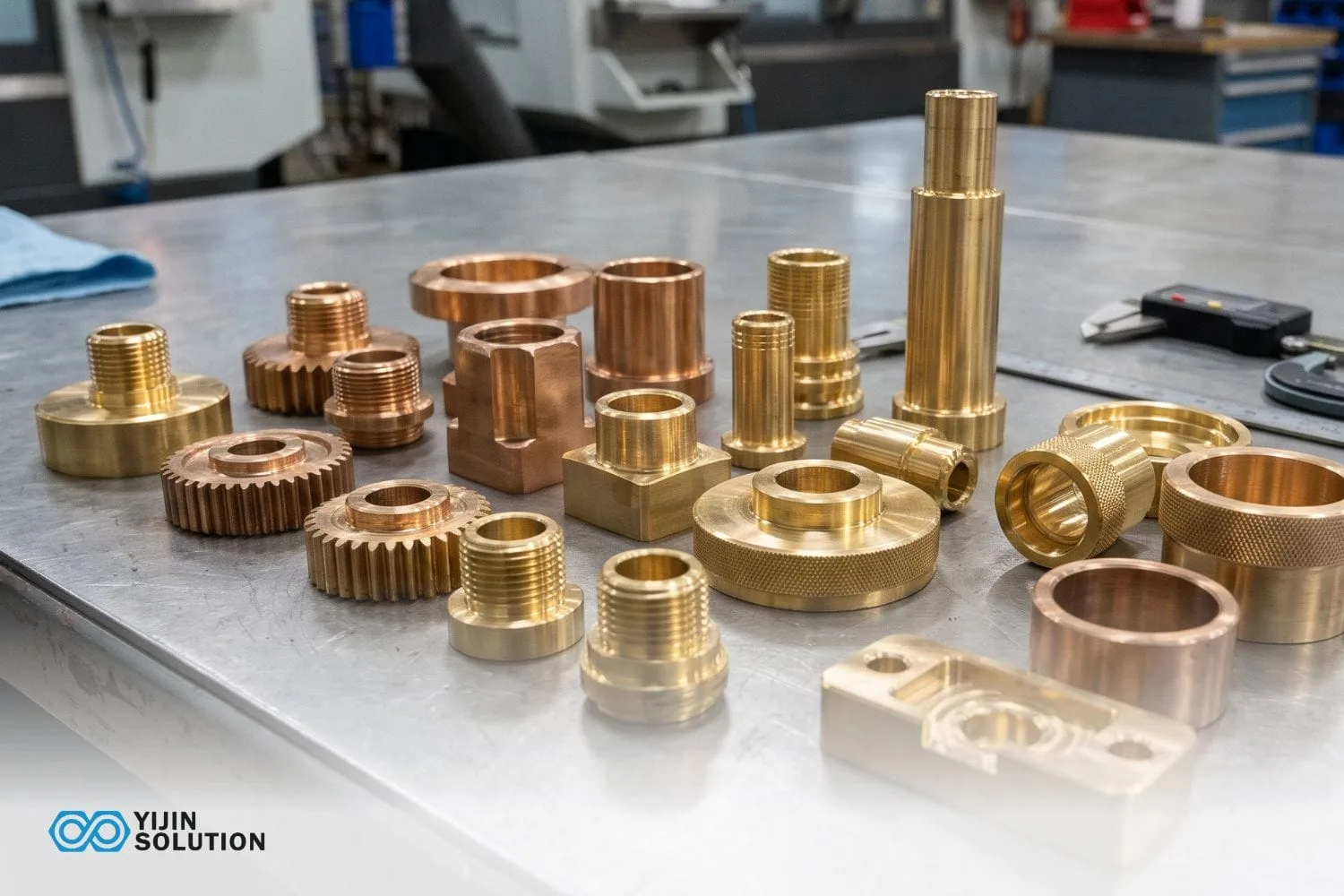
An engineer specifying a bushing, a spring contact, or a threaded fitting often has to choose between phosphor bronze and brass before the first quote goes out. The two alloys look much alike on a drawing, yet they behave differently in service and on the machine.

Phosphor bronze is a copper alloy strengthened with tin and a small amount of phosphorus, while brass is a copper alloy built mainly on zinc. The phosphor bronze vs. brass decision depends on whether the part must flex, slide, or carry current, weighed against how quickly it can be machined.

Settling that trade-off by part function, rather than by alloy family name alone, yields a specification that holds up in service and on the quote.
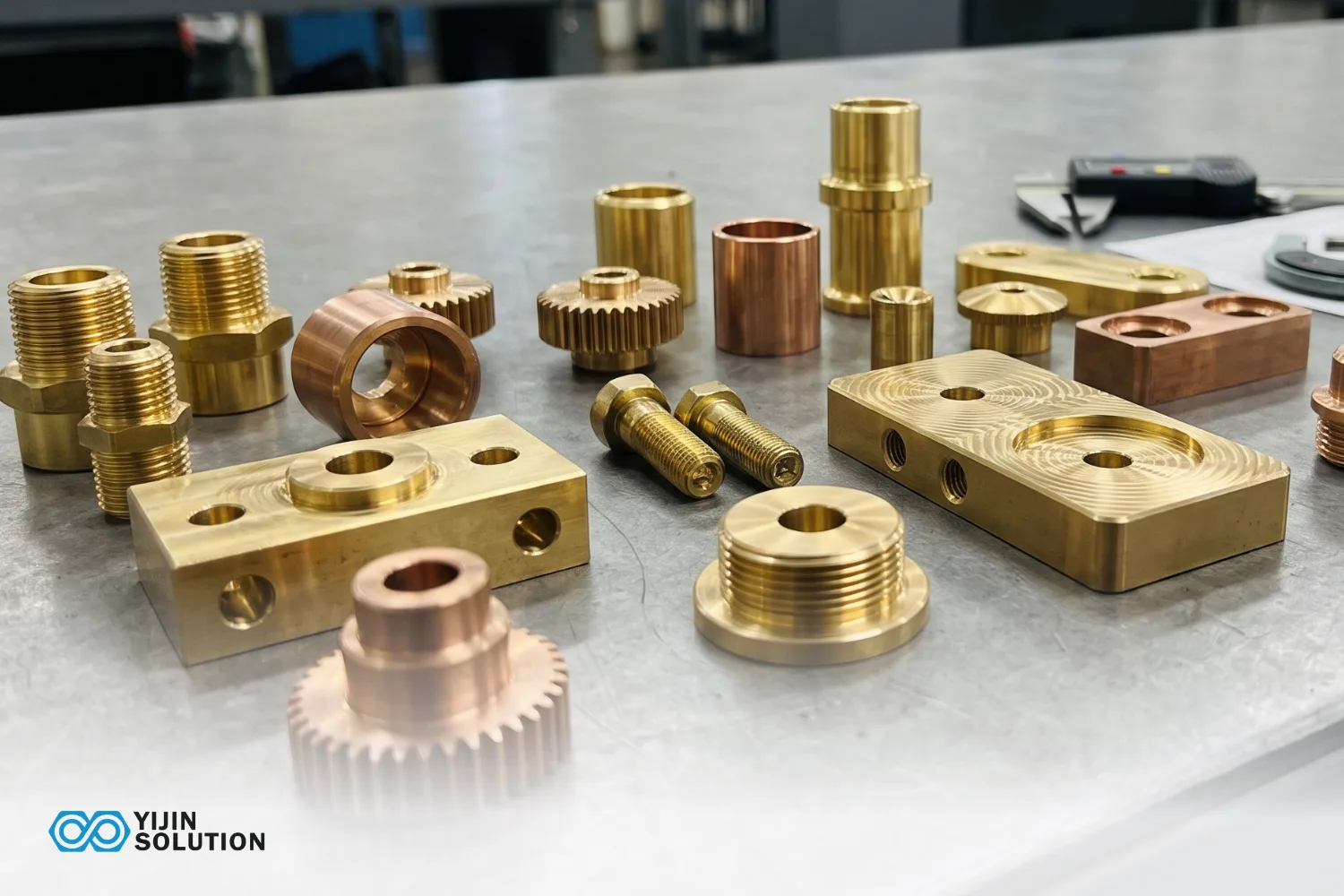
phosphor bronze vs brass for cnc machined parts which alloy to specify

What are Phosphor Bronze and Brass?

Each alloy family splits into grades with distinct machining behavior, so the comparison is clearer at grade level. The table below compares the three grades most often specified for machined parts.

C51000 is the standard wrought phosphor bronze, with about 5% tin, and it covers springs, contacts, and bushings. C54400 adds lead and some zinc to the same tin and phosphorus base.

C36000 free-cutting brass is the machining benchmark that other copper alloys are rated against. Bronze grades outside the phosphor family are compared in the bronze vs. brass guide.

Table 1 uses typical Copper Development Association figures, such as the C51000 phosphor bronze data. Values vary with temper and bar size.

Table 1. Phosphor bronze and brass grades for machined parts

Eigentum Phosphor Bronze C51000 Leaded Phosphor Bronze C54400 Free-Cutting Brass C36000
Key additions Tin 4.2 to 5.8%, phosphorus 0.03 to 0.35% Tin 3.5 to 4.5%, lead 3.5 to 4.5%, zinc 1.5 to 4.5% Zinc about 35%, lead 2.5 to 3.7%
Machinability rating, C36000 = 100 20 80 100
Electrical conductivity 15 % IACS 19% IACS 26% IACS
Tensile strength, hard-temper rod About 380 to 480 MPa About 345 to 450 MPa About 330 to 530 MPa
Fatigue and spring performance Hoch Mäßig Niedrig
Wear resistance against steel Hoch Hoch Mäßig
Dezincification risk Not a concern Not a concern Possible in some wet service
Contains lead No added lead Ja Ja
Relativer Materialpreis Höher Höher Unter

Which Alloy is Easier to Machine?

Machinability is the largest practical gap between the two alloys, and it drives cycle time, tool life, and unit cost.

Chip formation and tool wear

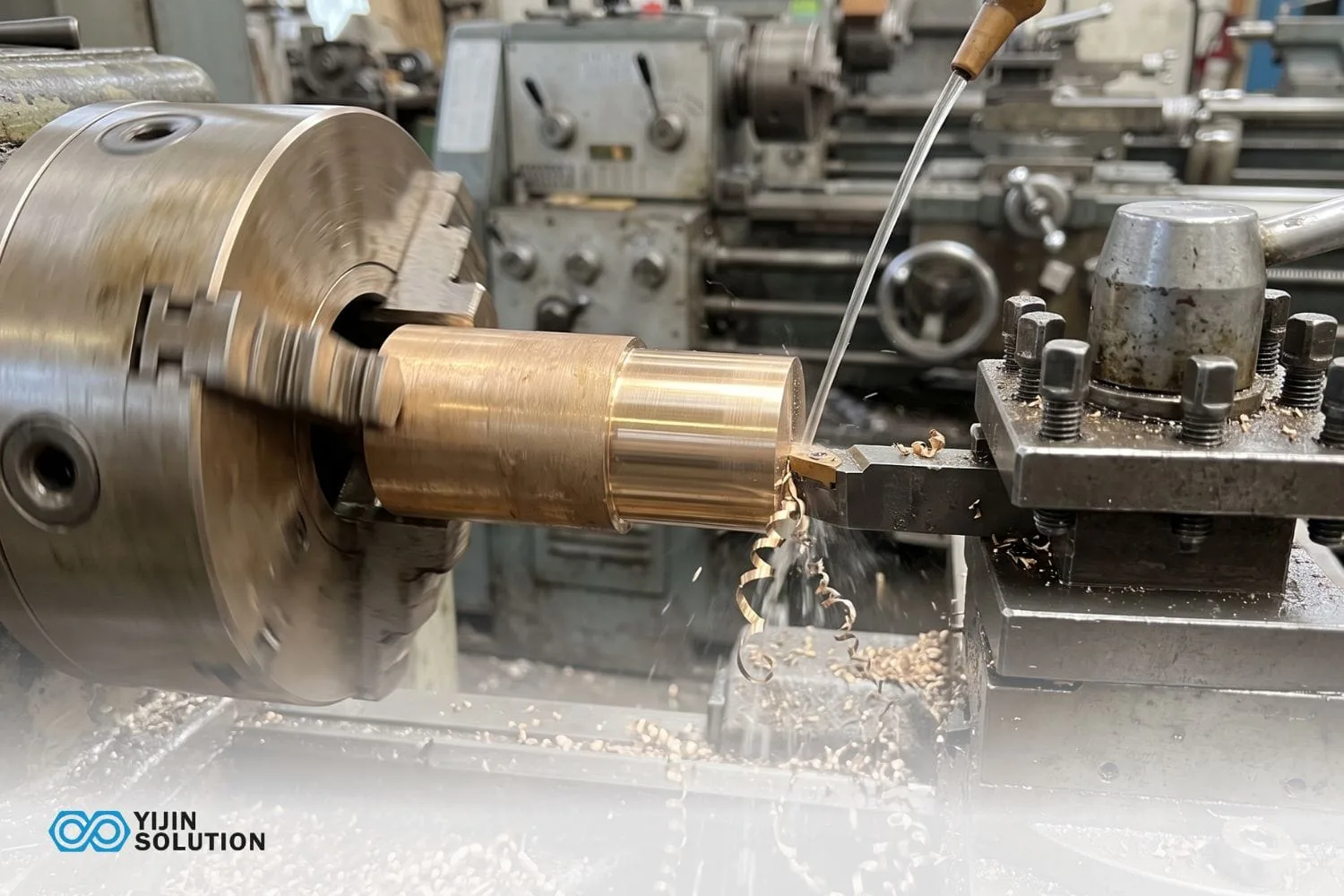
C36000 forms short, broken chips at high spindle speeds, and its free-cutting brass properties suit high-volume turning and threading. Chips clear without operator help, so long-attended runs are practical.

C51000 produces continuous chips that need breaking, so it runs at slower feeds with more tool wear per part. The gap widens further in deep holes and fine threads.

Both alloys hold ISO 2768 general tolerances on typical turned features when the drawing names a tolerance class. Tighter bands depend on the feature, the setup, and the temper. Typical capability for brass parts is listed on the CNC-Bearbeitung von Messing Seite.

Leaded phosphor bronze as a middle option

C54400 machines close to brass because the lead acts as a chip breaker, as the C54400 alloy data shows. It gives bushings and bearings bronze wear behavior at a practical machining rate. Leaded grades are less suited to parts that will be welded or brazed, since the lead can crack the joint at high temperature.

How Do Strength, Wear, and Fatigue Resistance Compare?

Rod tensile strength overlaps between the two alloys, so the real difference shows up under repeated flexing and sliding contact. Those two duties decide most bushing, spring, and contact specifications.

Fatigue and spring performance

Tin in solid solution, combined with cold work, gives C51000 high fatigue strength and spring properties that hold under cyclic load. Brass has lower fatigue strength and relaxes faster under sustained deflection, so contact force drops over time.

Thin, flat springs are usually stamped from strip rather than machined. Machined phosphor bronze covers heavier spring elements, contact bodies, and flexing clips.

Wear and sliding contact

Phosphor bronze runs against steel shafts with low friction and resists galling, provided the bearing keeps a lubricant film. Its wear rate stays low at the moderate loads and speeds common in sleeve bushings. Brass handles light sliding duty but wears faster once contact pressure or speed rises.

How Do Corrosion Resistance and Conductivity Compare?

Both alloys resist ordinary atmospheric corrosion, so the comparison turns on wet service and current-carrying performance. A part that sits in water or carries current can need a different alloy than its load and wear alone would suggest.

Corrosion, dezincification, and drinking water

In some water conditions, brass with more than about 15% zinc can lose zinc through Entzinkung, which leaves the surface spongy and weak. Phosphor bronze has no meaningful zinc content to lose and stays stable in fresh water and many mild chemicals.

Leaded grades, including C54400 and C36000, are ‌excluded from parts in contact with drinking water, and lead-free alloys are specified instead. Silicon bronze is a common choice for heavy seawater exposure.

Electrical conductivity

Brass conducts noticeably better than phosphor bronze, as Table 1 shows, so it suits static current-carrying parts. Phosphor bronze is specified for contacts that must also spring or resist fretting, accepting the lower conductivity.

Which Machined Parts Suit Each Alloy?

Part function decides the brass vs. phosphor bronze question more reliably than any single property. Most machined parts fall into a clear pattern.

Gears and valve parts sit between the two phosphor bronze grades. C54400 suits them when sliding wear governs, and C51000 when the part also takes shock or cyclic tooth load.

Brass parts carry light loads, run in volume, and rarely need bearing or spring behavior.

Table 2. Typical machined parts and the usual alloy

Machined part Usual alloy
Sleeve bushings and thrust washers Leaded phosphor bronze C54400
Flexing contacts and spring clips Phosphor bronze C51000
Light-duty gears and worm wheels Phosphor bronze C51000 or C54400
Valve stems and valve parts in non-potable water Phosphor bronze C51000 or C54400
Fittings, adapters, and threaded connectors, non-potable Messing C36000
Terminals and connector pins Messing C36000

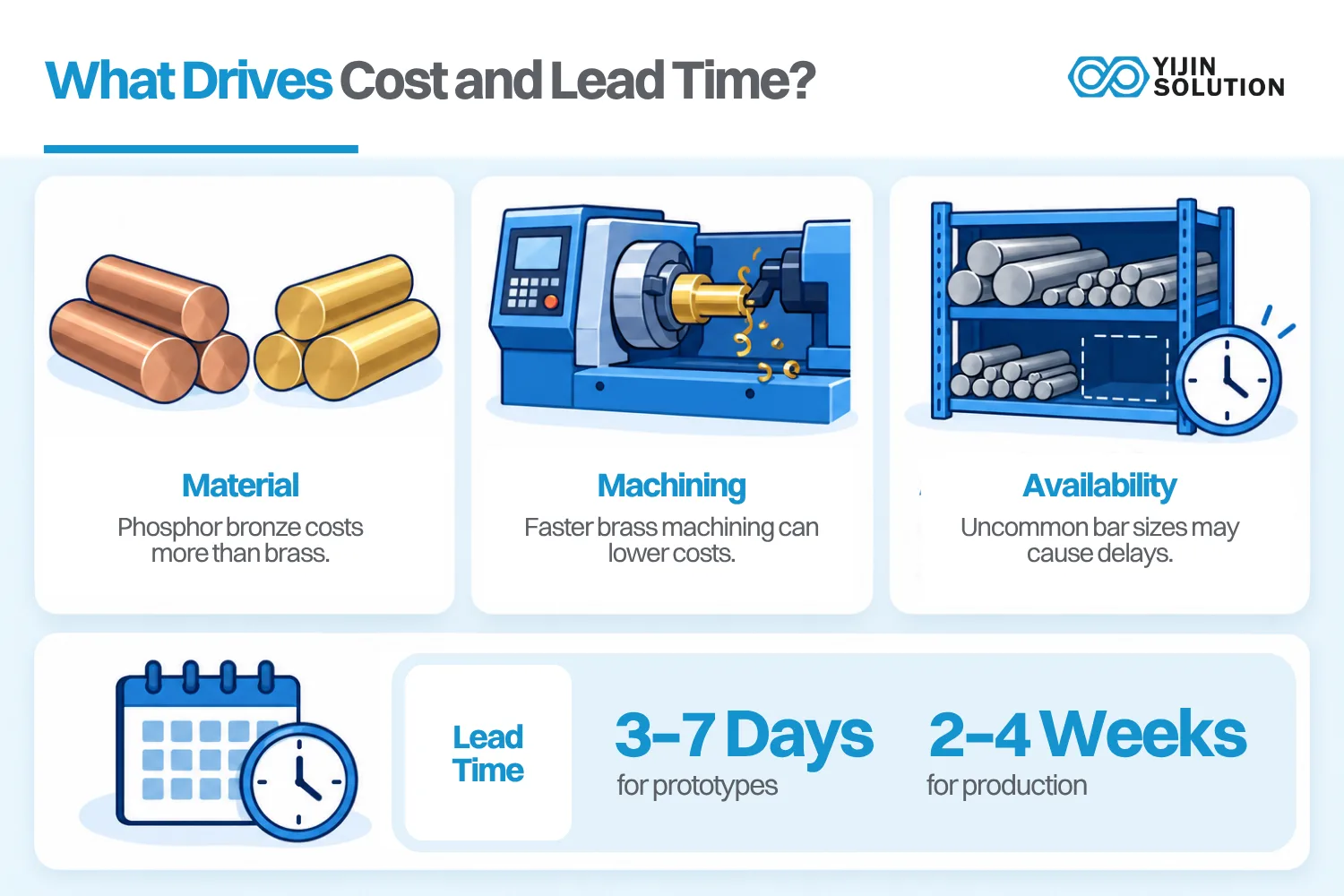
What Drives Cost and Lead Time?

what drives cost and lead time phosphor bronze vs brass

Two cost drivers separate the alloys, and a third affects lead time. How much each one matters depends on part size and batch quantity.

  • Material price: Tin is priced well above zinc, so the phosphor bronze bar carries a higher material cost.
  • Cycle time: On small, feature-dense parts, machining time can outweigh material cost, so the faster brass cycle drives most of the price gap. C54400 narrows that gap.
  • Bar availability: Phosphor bronze bar is stocked in fewer sizes than brass, which can add procurement time for large or unusual diameters.

Yijin Solution's typical lead times are 3 to 7 days for prototypes and 2 to 4 weeks for production, depending on part complexity and bar availability. Since less common phosphor bronze bar sizes can add procurement time, designing around a standard bar diameter helps those parts meet the same lead times as brass.

Phosphor Bronze vs. Brass: Which Alloy Should Be Specified?

For the phosphor bronze vs. brass decision, the requirement that would end the part’s service life first sets the grade. Each row in the table starts with one such requirement, and the paragraph after it covers parts facing two.

Table 3. Which alloy to specify by part requirement

Part requirement Specify Grund
Repeated flexing or cyclic load Phosphor bronze C51000 Higher fatigue strength and spring retention
Sliding contact against a steel shaft Leaded phosphor bronze C54400 Wear resistance with near-brass machining speed
High-volume turned part, light load Messing C36000 Fastest machining and lowest unit cost
Static current-carrying part Messing C36000 Higher electrical conductivity
Wet or chlorinated water service Phosphor bronze C51000 No zinc to lose and no added lead

Some parts face two competing demands, such as a bushing that also carries current. Brass conducts best but wears fastest against a steel shaft, while C51000 wears well but conducts the least of the three.

C54400 sits between them, with bronze wear resistance and slightly higher conductivity than C51000, so it is the usual starting grade. If the current load is high, DFM review can confirm whether plating or a separate conductor path is needed.

Specifying Phosphor Bronze or Brass for a Machined Part

Phosphor bronze earns its higher cost in parts that slide against steel or flex under cyclic load, while brass stays the economical choice for fittings, terminals, and lightly loaded parts. C54400 bridges the two when a part needs bronze wear behavior at close to brass machining speed.

Naming the exact grade and temper on the drawing, rather than the family alone, keeps every quote and every lot on the same specification.  Yijin Solution machines both alloys and checks each drawing against the part’s load, wear, and service conditions before confirming the grade.

Engineers comparing the two can send a drawing with service requirements for a free DFM review.

Phosphor Bronze vs. Brass for CNC Machined Parts FAQs

How can brass vs. phosphor bronze be told apart on the shop floor?

Phosphor bronze has a darker, reddish-gold color, and free-cutting brass has a bright yellow tone on fresh stock. Color is hard to read after plating or tarnish, so a mill certificate or XRF test confirms the grade during incoming inspection.

Is phosphor bronze magnetic?

Phosphor bronze is non-magnetic, and so is brass, because both have a non-ferromagnetic copper matrix. Either alloy can sit next to sensors, relays, and other magnetically sensitive components.

Does phosphor bronze tarnish like brass?

Phosphor bronze darkens to an even brown patina, and brass dulls and can show green or black spots in humid air. Parts that need a stable appearance or contact surface are commonly finished with nickel, tin, or silver plating, or a clear lacquer.

Can phosphor bronze and brass be soldered?

Phosphor bronze and brass both solder readily with standard tin-based solders and a suitable flux. Degreasing and lightly abrading the joint first gives the most consistent wetting.

Zurück zum Anfang: Phosphor Bronze vs. Brass for CNC Machined Parts: Which Alloy to Specify
PrevVorherigeCopper CNC Machining Guide: Grade Selection, Machinability and Design
gavinyyi
CEO & Projektleiter
Shenzhen Yijin Solution.
LinkedIn
Ausgewiesene Expertin
Symbolgravatar
Gravatar
Herr
Muckrack

Gavin Yi

Gavin Yi ist einer der führenden Experten für Präzisionsfertigung und CNC-Technologie. Als regelmäßiger Redakteur der Zeitschriften Modern Machine Shop und American Machinist vermittelt er sein Fachwissen über fortschrittliche Bearbeitungsprozesse und die Integration von Industrie 4.0. Seine Forschungsarbeiten zur Prozessoptimierung wurden im Journal of Manufacturing Science and Engineering und im International Journal of Machine Tools and Manufacture veröffentlicht.

Gavin ist Mitglied des Vorstands der National Tooling & Machining Association (NTMA) und hält regelmäßig Vorträge auf der International Manufacturing Technology Show (IMTS). Er verfügt über Zertifizierungen von führenden CNC-Schulungseinrichtungen, darunter das Advanced Manufacturing Programm der Goodwin University. Unter seiner Leitung arbeitet Shenzhen Yijin Solution mit DMG Mori und Haas Automation zusammen, um Innovationen in der Präzisionsfertigung voranzutreiben.

gavinyyi


yijin Lösung weiß

Ein Angebot von China's #1 einholen
CNC-Bearbeitungsdienstleistungen.

Sind Sie bereit, loszulegen?
Nehmen Sie noch heute Kontakt mit uns auf!

Jetzt ein Angebot einholen
Kategorien
  • 3D-Druck-Leitfäden
  • Fallstudien
  • Leitfäden zum Gießen
  • CNC-Bearbeitung
  • Kundenspezifische Befestigungen
  • Einblicke in die Industrie
  • Materialien
  • Nachrichten & Blog
  • Newsroom
  • Bleche
  • Oberflächenbehandlung
Verwandte Artikel
silicon bronze vs brass for cnc machined parts corrosion strength and machinability
Materialien
Silicon Bronze vs Brass for CNC Machined Parts: Corrosion, Strength and Machinability

Compare silicon bronze vs brass for CNC parts. Request alloy recommendations, DFM support, and a custom machining quote from Yijin Solution.

Gavin Oktober 28, 2026
what is abs material
Materialien
Was ist ABS-Material? Eigenschaften, Verwendung & Grenzen

Acrylonitrile butadiene styrene, or ABS, is a thermoplastic polymer used in everything from car dashboards and LEGO bricks to protective helmets and electronic housings. It

Gavin 30. April 2026
fortschrittliche Materialien für humanoide Roboter
Materialien
Fortschrittliche Materialien für humanoide Roboter | Ihr umfassender Leitfaden für die neueste Technologie

Beim Bau eines humanoiden Roboters müssen die Materialien so ausgewählt werden, dass sie die konkurrierenden Anforderungen erfüllen - Festigkeit ohne übermäßiges Gewicht, Flexibilität, wo sie benötigt wird, und Haltbarkeit, um dem ständigen Gebrauch standzuhalten. Die Materialien

Gavin Januar 29, 2026

Beginnen Sie noch heute. Teile schnell herstellen lassen.

Kostenloses Design von bearbeiteten Teilen für Ihre Projekte mit schnellen Durchlaufzeiten.
Angebot anfordern
Yijin Solution Logo

Beste CNC-bearbeitete Teile Hersteller und Fabrik in China.

Wir bieten schnelle und kosteneffiziente CNC-Bearbeitungsdienstleistungen aus einer Hand.

Kostenloses Design von bearbeiteten Teilen für Ihre Projekte mit schnellen Durchlaufzeiten.

Facebook Linkedin Tiktok Youtube

Über

  • Über uns
  • Hauptveranstaltungen & Kultur
  • Werksansicht
  • FAQ
  • Inhaltsverzeichnis
  • Datenschutz
  • Impressum
  • Cookie-Einstellungen

Dienstleistungen

  • CNC-Bearbeitung
  • CNC-Drehen
  • CNC-Fräsen
  • CNC-Holzfräsen
  • Blechbearbeitung
  • Laserschneiden
  • Plasmaschneiden
  • Metallbiegen
  • Kundenspezifische Befestigungen
  • Druckguss

Schnelle Links

  • CNC-Bearbeitung China
  • Ressourcen
  • Videos
  • Kontakt

Kontakt

  • Tera
  • +1 844 598 7800
  • info@yijinsolution.com
  • Chat
  • https://yijinsolution.de/
  • Anschrift: 1825 NW Corporate Blvd, Suite 110-I48, Boca Raton, FL 33431,
    Vereinigte Staaten
  • Anschrift: No. 228 Wanfeng Middle Road, Xinqiao Street, Bao’an District, Shenzhen, Guangdong, China
  • Anschrift: Wohnung E19, 10/f, No.52 Hung To Road, Kwun Tong, Hongkong

© 2026 Yijin Solution. Alle Rechte vorbehalten

E-Mail-Symbol

WhatsApp uns

WhatsApp uns